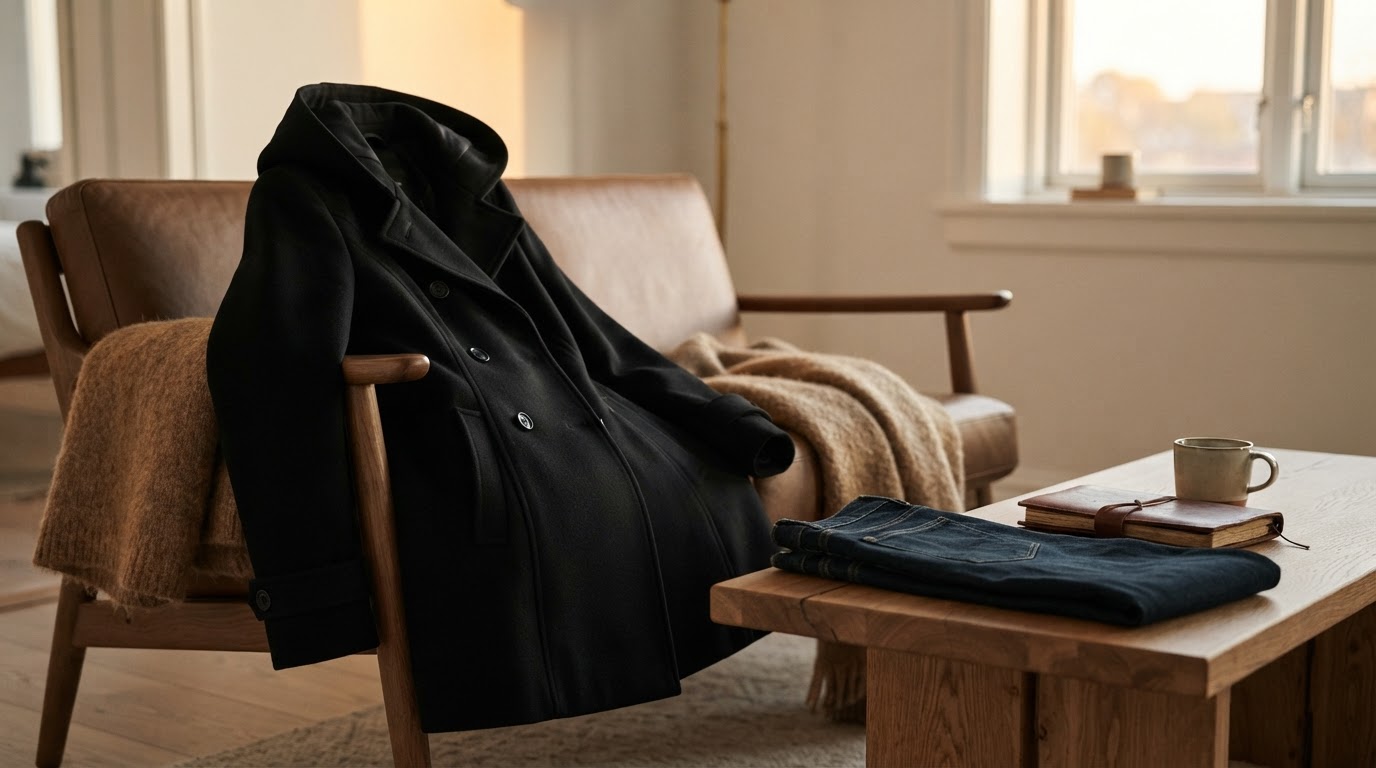
The Dual-Pivot Framework for Hooded Wool Pea Coat Selection
 Priya RamanSenior Analyst
September 24, 2026 — The shift toward versatile outerwear has prioritized the black double breasted wool coat as a staple that bridges the gap between formal structure and casual utility. The Hooded Wool Pea Coat represents a modern evolution of this silhouette, integrating protective elements without sacrificing the traditional maritime aesthetic.
Selecting high-performance outerwear requires a technical understanding of textile density and architectural design. According to textile standards maintained by the American Society for Testing and Materials (ASTM), the efficacy of a wool garment is determined by its ability to trap air within the fibers while resisting moisture penetration. This creates a thermal barrier that is essential for maintaining core temperatures in fluctuating climates.
The Dual-Pivot Framework
When evaluating the black double breasted Hooded Wool Pea Coat, two axes matter here: structural formality and thermal utility. Think of it as a matrix of aesthetic rigor versus environmental readiness. On the horizontal axis, we measure the coat's formal utility, defined by the double-breasted closure and traditional notched lapels. On the vertical axis, we measure thermal utility, enhanced by the integrated hood and heavyweight wool construction. The Hooded Wool Pea Coat occupies the upper-right quadrant of this matrix, providing the visual weight of a tailored garment with the practical coverage of a parka. The decision rule: if your environment demands a professional profile but subjects you to unexpected precipitation, the hooded variant is objectively superior to the standard open-collar pea coat. This model utilizes a high-percentage wool blend designed for maximum heat retention. The structural integrity is maintained through a reinforced double-breasted button layout, which creates a multi-layered barrier against wind ingress. Unlike lighter alternatives, this heavyweight construction ensures the garment retains its shape even after prolonged wear in damp conditions. By prioritizing a deep black pigment, the coat avoids the rapid visual degradation common in lighter fabrics, ensuring longevity across multiple seasons. When compared to a fitted wool pea coat for winter, this specific design offers more internal volume for layering while maintaining a sharp, rectangular silhouette that flatters a variety of body types.
Expert tip: To maximize the lifespan of the heavyweight wool, always hang the coat on a wide-shouldered wooden hanger to prevent the weight of the hood from distorting the shoulder seams over time.
Once you see it this way, the choice between a standard jacket and a hooded wool pea coat heavy winter performance layer becomes a matter of calculating your exposure to the elements. For those transitioning between corporate environments and outdoor commutes, the fitted wool pea coat for winter provides a streamlined look, but the hooded wool pea coat heavy winter performance remains the standard for deep-season resilience.