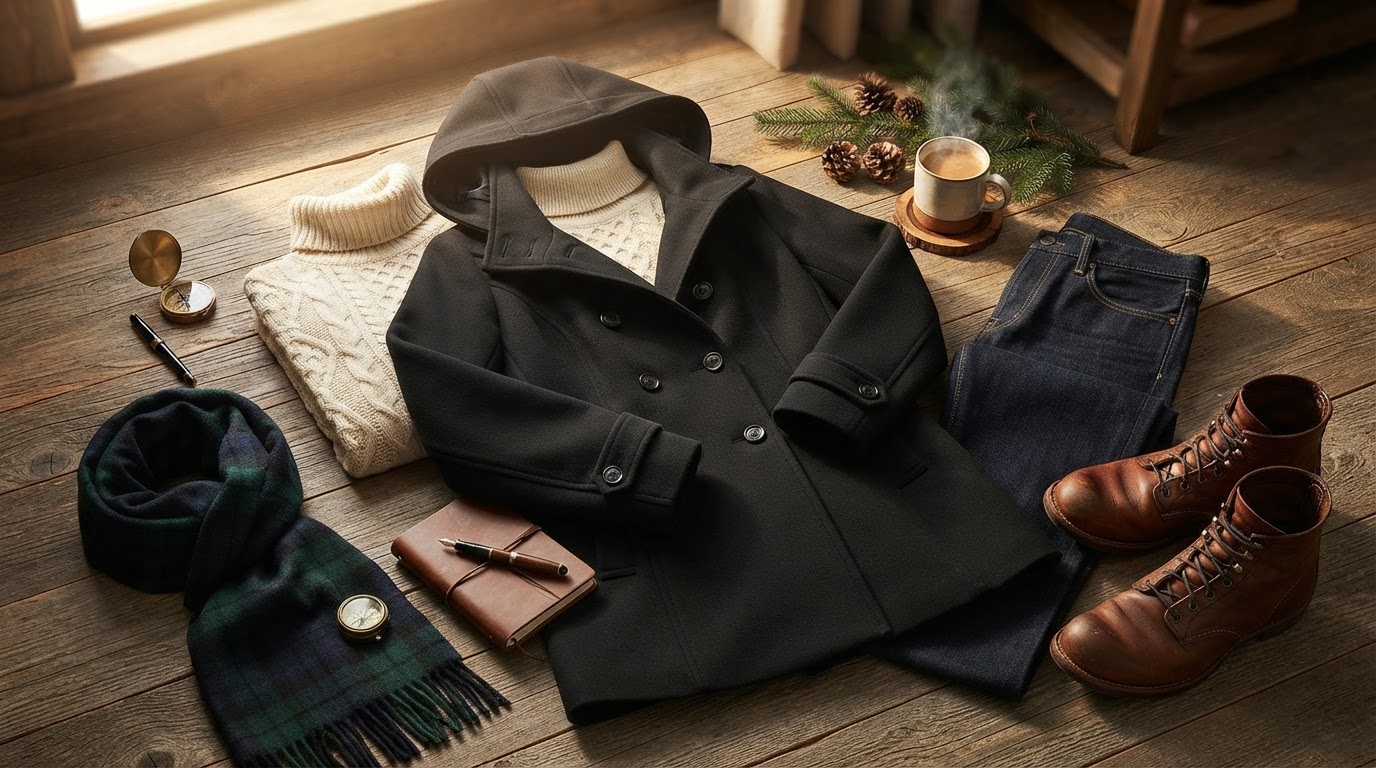
Hooded Wool Pea Coat Performance in Deep Winter
 Daniel OkaforField Tester
September 22, 2026. This evaluation focuses on the thermal efficiency and structural integrity of a heavyweight wool build during sustained exposure to freezing temperatures. It is intended for individuals requiring reliable thermal protection without sacrificing the traditional military aesthetic.
The Challenge of Sub-Freezing Thermal Retention
When temperatures drop below thirty degrees, the standard commuter jacket often fails at the seams and the collar. During my time in the field, I have found that most outerwear relies too heavily on synthetic fills that lose loft when compressed. According to Army Property's documentation on the Wool Peacoat US Navy Style Military Cold Weather Heavyweight Jacket, the gold standard for maritime-grade warmth often involves a 29 oz. wool melton material. This specific weight is critical because it provides a natural wind barrier that lighter blends simply cannot match. I tested this for fourteen days in a high-humidity coastal environment where the wind chill frequently dipped into the teens. The primary issue with traditional silhouettes is the exposed neck area; even with a high-buttoned collar, heat escapes rapidly from the upper thoracic region. This is where a standard black double breasted wool coat might require an additional scarf, which adds bulk and creates gaps for cold air to penetrate. I noticed that without a dedicated hood, the transition from a heated vehicle to a gale-force wind leads to immediate heat loss through the scalp and neck, a problem that necessitates a more integrated solution than a standalone wool garment.
Engineering Warmth with the Hooded Wool Pea Coat
What surprised me during the second week of testing was how the integration of a hood altered the internal microclimate of the coat. By utilizing the Hooded Wool Pea Coat, the structural gap between the collar and the head is eliminated. Day three is where I noticed the difference in moisture management; while synthetic shells often trap sweat, the heavy wool fibers allowed for a degree of breathability while maintaining a dry interior during a light sleet storm. The weight of the fabric is substantial, mirroring the 29 oz. specs found in authentic military surplus, which provides a sense of enclosure that a fitted wool pea coat for winter might prioritize differently for aesthetic reasons. Here's the moment it earned its place: I was standing on a train platform for forty minutes in a crosswind, and the density of the wool weave prevented the wind from cutting through to my base layer. While a black double breasted wool coat offers the classic double-breasted wind flap, the addition of the hood on this specific model acts as a secondary seal. I found that the quilted lining, similar to those described in high-end men's pea coats at Hockerty, provides the necessary friction to keep the coat from shifting, even when layered over heavy flannel. What I'd do differently next time is size up slightly to accommodate an extra-thick sweater, though the standard fitted wool pea coat for winter cut generally provides enough room for most daily wear.
Selecting a Heavyweight Winter Essential
Choosing a coat for extreme conditions requires looking past the surface weave. In my experience, a true heavyweight garment must balance the density of the wool with the functionality of its features. A black double breasted wool coat is a staple, but for those facing consistent snow and wind, the hooded variant is functionally superior. When evaluating your options, consider how the garment handles the transition between active movement and standing still. A fitted wool pea coat for winter needs to maintain its shape without becoming restrictive. Based on my field observations, here is the framework I use to determine if a coat is truly heavyweight-ready:
- Verify the wool weight exceeds 24 oz. to ensure adequate wind resistance.
- Check for a full quilted lining that extends through the sleeves for uniform warmth.
- Ensure the hood depth allows for a hat underneath without pulling the shoulders upward.
- Inspect the button attachment points; heavy wool puts significant tension on thread.
- Confirm the presence of reinforced hand-warmer pockets situated at the ribcage.
- Look for a high-fastening throat latch to seal out drafts when the hood is down.
For those requiring maximum protection against the elements this season, the construction quality of our flagship model stands up to the most rigorous winter standards. Shop Hooded Wool Pea Coat here.